

- Blog
- Renewable energy
- Advantages and disadvantages of renewable energy
The advantages and disadvantages of renewable energy
- Renewable energy
- 3 min read
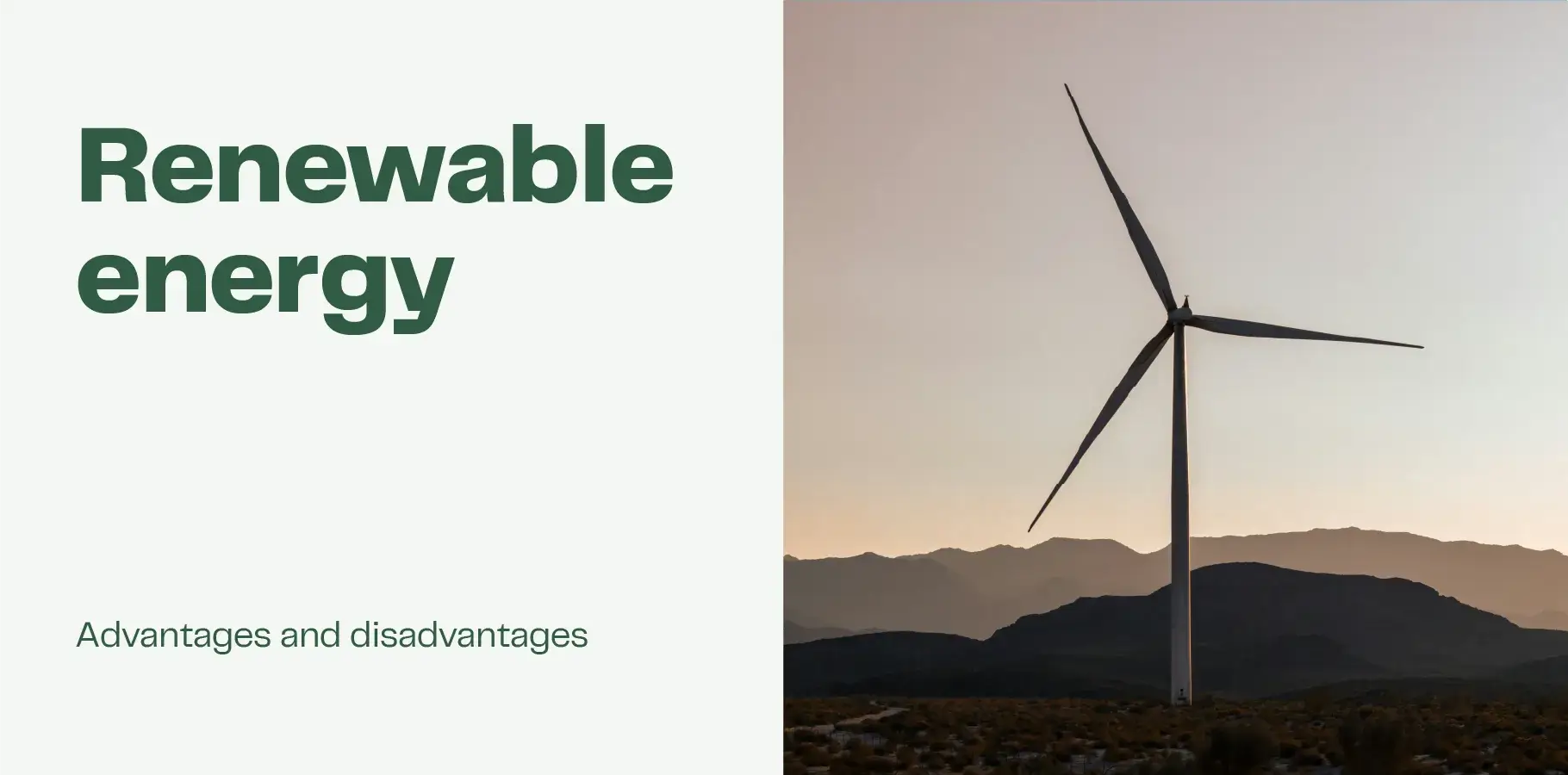
Renewable energy is quickly becoming the world’s cheapest and most popular source of electricity as the world accelerates the transition away from fossil fuels. By definition, renewable energy is infinite and it does not diminish over time. It is typically generated from sunshine, wind and water.
Using renewable sources reduces carbon emissions – which we all benefit from. In addition, there are several other advantages and disadvantages of renewable energy that may help influence your next investment or home upgrade.
Popular sources of renewable energy
There are different sources of renewable energy:
- Solar
- Wind
- Hydroelectric energy (hydropower)
- Bioenergy
- Geothermal
- Ocean energy
The most popular forms of renewable energy are solar, wind and hydropower, and our list of advantages focuses on these relatively more accessible sources.
Benefits of renewable energy
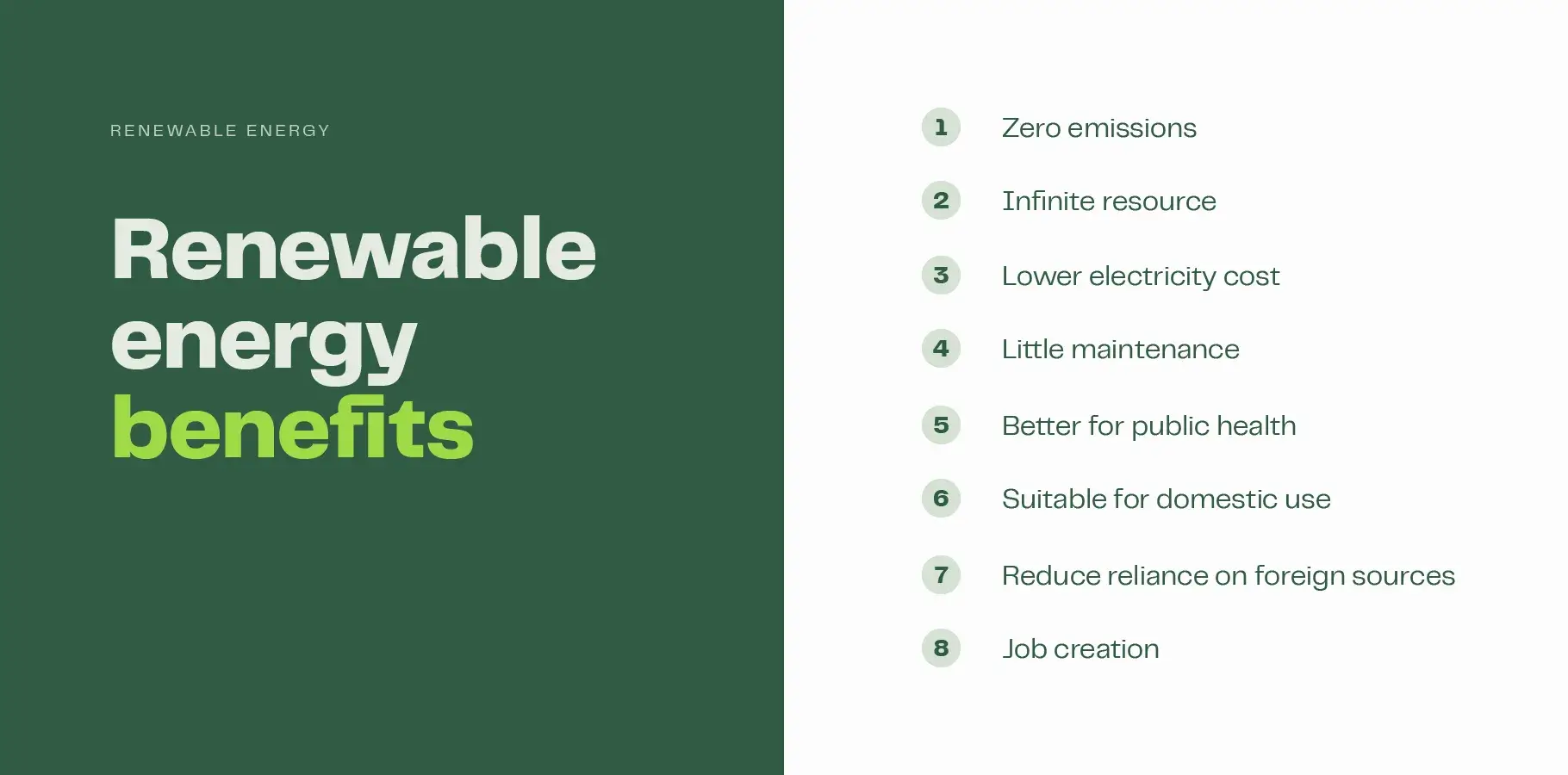
There are many benefits that renewable energy have over traditional fossil fuel sources, including:
- Zero emissions – great for the environment
- By definition, renewable energy is an infinite resource that will not deplete
- Lower cost of electricity
- Require little maintenance
- Better for public health
- Renewable sources can be suitable for domestic use
- Reduces reliance on foreign energy sources
- Job creation
1. Zero emissions – renewables are great for the environment
Renewable energy converts natural resources into clean electricity without producing any carbon emissions or harmful air pollutants.
2. By definition, renewable energy is an infinite resource that will not deplete
Renewable energy is generated from resources that do not diminish over time. There will always be an abundance of resources available for humankind to harvest.
3. Lower cost of electricity
Renewables typically lower the cost of electricity. The International Renewable Energy Agency reports that 91% 1 of new renewable projects commissioned in 2024 were cheaper than fossil fuel alternatives. New wind projects were 53% cheaper while new solar projects were 41% cheaper by comparison.
For Australian households, our analysis concludes that solar energy can reduce the cost of electricity to 4.1c per kWh 2 and lead to significant savings on electricity bills.
4. Require little maintenance
Renewable forms of energy typically require less maintenance than their higher emitting counterparts. At domestic level, household solar seldom requires maintenance.
5. Better for public health
There are significant public health benefits from using energy generated from renewable sources. The World Health Organisation (WHO) estimates that 2.1 billion people 3 live in households with dangerous levels of air pollution. Alarmingly, poor air quality is reportedly responsible for 2.9 million deaths each year, 309,000 3 of which are children under 5years of age.
6. Renewable sources can be suitable for domestic use
Some forms of renewable energy are suitable for domestic use. Solar panels in particular are ideal for household installations, and are mostly accessible to everyone. Wind turbines can also be useful in rural settings.
7. Reduces reliance on foreign energy sources
Many countries around the world import energy sources from foreign countries, while Australia exports 89% of its black coal production 4. Generating renewable energy not only increases energy independence, it reduces the reliance on foreign energy sources and the emissions associated with exporting.
Increasing renewable energy supply is a major potential benefit for countries that import coal and gas.
8. Job creation
It is estimated the renewable energy sector is responsible for employing 13.7 million 4 people each year. Leading the charge is the solar industry which is responsible for 4.9 million jobs.
The table below shows the breakdown of jobs in the renewable energy sector globally:
| Industry | Jobs |
|---|---|
| Solar (PV) | 4.9 million |
| Hydropower | 2.5 million |
| Biofuels | 2.5 million |
| Wind power | 1.4 million |
| Others | 2.4 million |
| Total Renewable jobs | 13.7 million |
Sources:
1 Renewable energy projects 2024 – International Renewable Energy Agency
2 Cost of electricity with solar – Solar Calculator
3 Household air pollution and health – World Health Organisation
4 Australia exports 89% of its black coal production – Solar Calculator
5 Renewable energy jobs review 2023 – International Renewable Energy Agency
Advantages by renewable energy source
Advantages specific to solar energy
Renewable energy shares many of the advantages that are specific to solar energy. Solar helps to reduce carbon emissions while also delivering electricity savings in many countries, not the least Australia. You can read a full list of advantages of solar energy here.
Advantages of solar energy include:
- Reduces carbon footprint
- Electricity bill savings
- Practicality
- Basic materials
- Long lifespans
Practical: Solar generation creates no noise or greenhouse gasses of any kind, making it one of the most practical forms of clean energy.
Basic materials: Solar panels require only three primary materials: silicon, metal, and glass. Their small ecological footprint makes them easy to manufacture on a large scale, with leading brands now producing millions of panels a year in highly automated factories.
Long lifespans: Solar panels are typically robust and can function efficiently in the harshest of environments. To underline their longevity, most solar panels come with a 25-year performance warranty and better panels come with 25 – 40-year product warranties.
Advantages specific to wind power
Wind power is typically used as a source of energy at domestic level, but industry sized plants are advantageous for grid supply. Benefits of wind energy include:
- More consistent generation
- Low cost
Consistent generation: Unlike solar panels, wind turbines have the ability to generate electricity 24 hours a day, if conditions allow. More consistent generation, coupled with the ability to produce at night, make wind power a vital source of the renewable energy mix.
Low cost: At industry level, wind energy provides a low cost source of energy. Onshore wind plants deliver the cheapest form of electricity in the United States at 3.4c per kWh 1.
Advantages specific to hydroelectric power
Hydroelectric power (hydropower) is a high-investment, large scale form of renewable energy. Once established, it has several advantages:
- Reliability
- Adjustable generation
- Long lifespans
Reliability: Hydropower is a reliable source of electricity generation. By managing the flow of large volumes of water, hydropower stations can maintain 24/7 electricity generation.
Adjustable generation: Hydropower can be managed to meet electricity demand by increasing and decreasing production as needed.
Long lifespans: Hydropower stations can operate for up to 100 years with relatively low maintenance and operating costs. For example, the Lake Margaret Power Station in Tasmania, Australia was built in 1914 6 and still generates electricity today. The plant was refurbished in 2009, some 95 years after it was first commissioned.
Sources:
6 Lake Margaret Power Station – Tasmania, Australia
Disadvantages of renewable energy
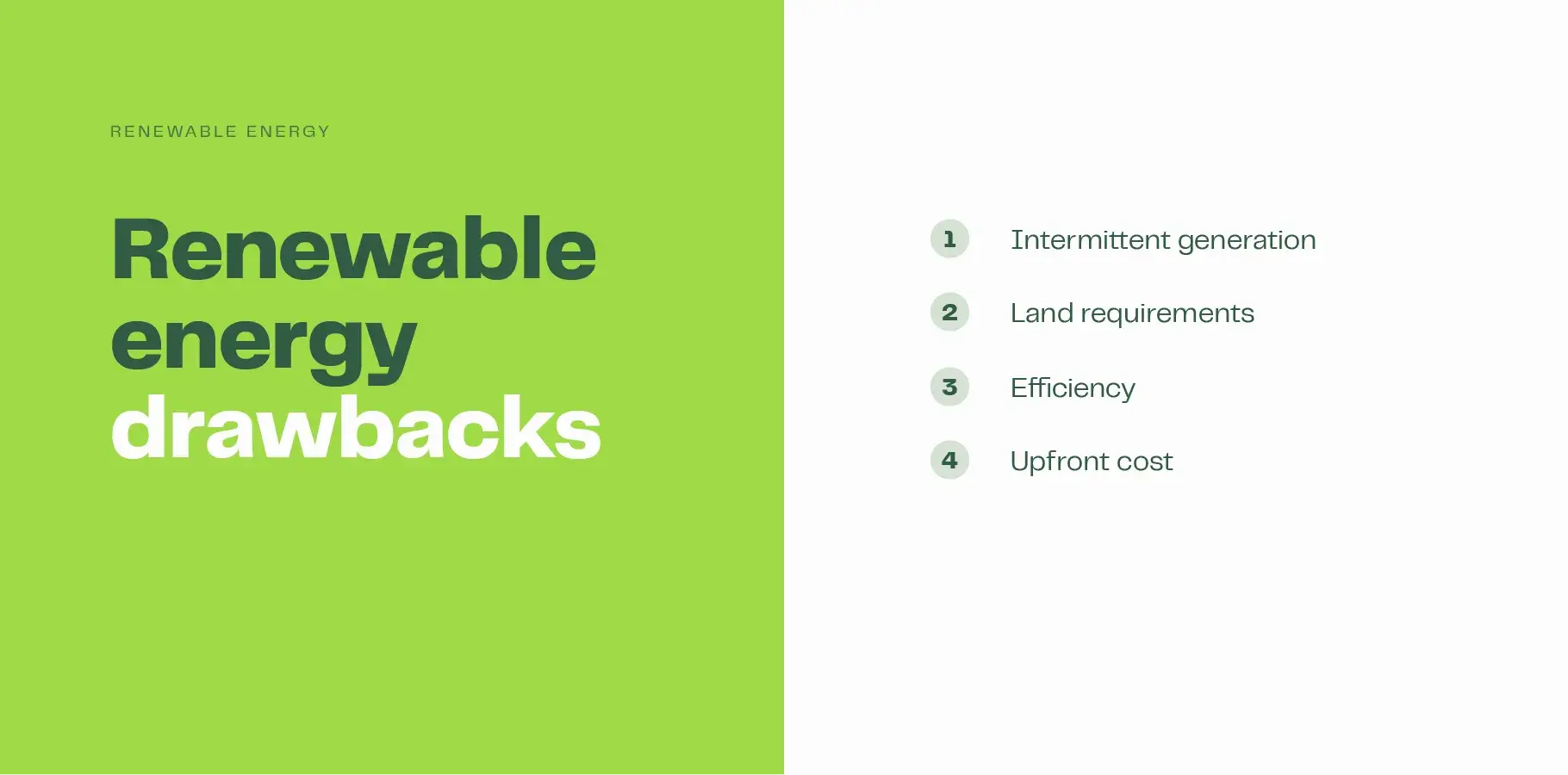
There are some disadvantages associated with renewable energy that hold back its uptake throughout the world, these include:
- Intermittent generation
- Land requirements
- Efficiency
- Upfront purchase cost
1. Intermittent generation
Most sources of renewable energy are intermittent and not always available when needed e.g., the sun isn’t always shining, the wind isn’t always blowing.
Thankfully, Australia has some of the world’s highest solar irradiance, and battery systems now enable system owners to use clean energy 24 hours a day.
2. Space and land requirements
While most Australian homes have generous roof spaces, large solar farms may contain tens of thousands of solar panels requiring vast open land areas.
Wind farms can cover hundreds of hectares of open land, which often makes their planning and approval a difficult long-term process.
3. Efficiency
Solar panels continue to make efficiency gains but still need rooftop area or land areas to capture sunlight. Wind turbines are only efficient in areas with average high wind speeds, limiting their availability to locations that may be far away from where electricity is needed.
4. Upfront purchase cost
Domestically, solar panels generate free electricity, but when combined with batteries, the system costs can be prohibitive for some home and business owners. Thankfully, incentives such as solar rebates, battery incentives, feed-in tariffs and low-cost financing, have made them affordable for a growing number of Australians.
Industrial scale wind farms, solar farms and hydroelectric power stations require significant capital investment.
Disadvantages associated with hydropower

The stark contrast of the Gordon Dam and the Tasmanian wilderness beyond.
While hydropower has many benefits as a source of renewable energy, there are challenges associated with establishing power plants of such a large scale. Challenges include:
- Environmental disruption
- Geographical limitations
- High capital costs
Environmental disruption: The construction of hydropower plants often involves the clearing of forest and land areas. In some cases, such as the damming of Lake Pedder in the 1970s, the reassigning of land use can be particularly destructive.
Changes to the natural flow of water can also negatively impact fish and marine life.
Geographical limitations: Hydro generation is only viable in areas that experience significant rainfall 7. Often stations are positioned in natural catchments that take advantage of large rainfall run-off areas.
High capital costs: Establishing a hydropower station requires a huge capital investment. Planning and construction typically takes years.
Sources:
7 Hydropower factsheet – Bureau of Meteorology
Invest if you can
Generating electricity from renewable sources has many advantages. Sourcing renewable energy can save money, reduce carbon emissions and is much better for public health. There are challenges too, it often requires an initial investment.
It is possible to invest in larger scale renewable projects, but, for many homeowners, solar panels are a great way to generate renewable energy. If you’re considering solar panels for your home or business, you can use our free solar panel calculator to project your estimated savings, payback period, system cost, and financial return, and then connect with three recommended solar installers in your local area.
 written byBy Michael Henderson