


Hybrid solar systems: Panels and a battery
A guide to solar systems with a battery.
A hybrid system is a grid-connected panel and battery system that can store the excess power generated from your panels in a battery for later use.
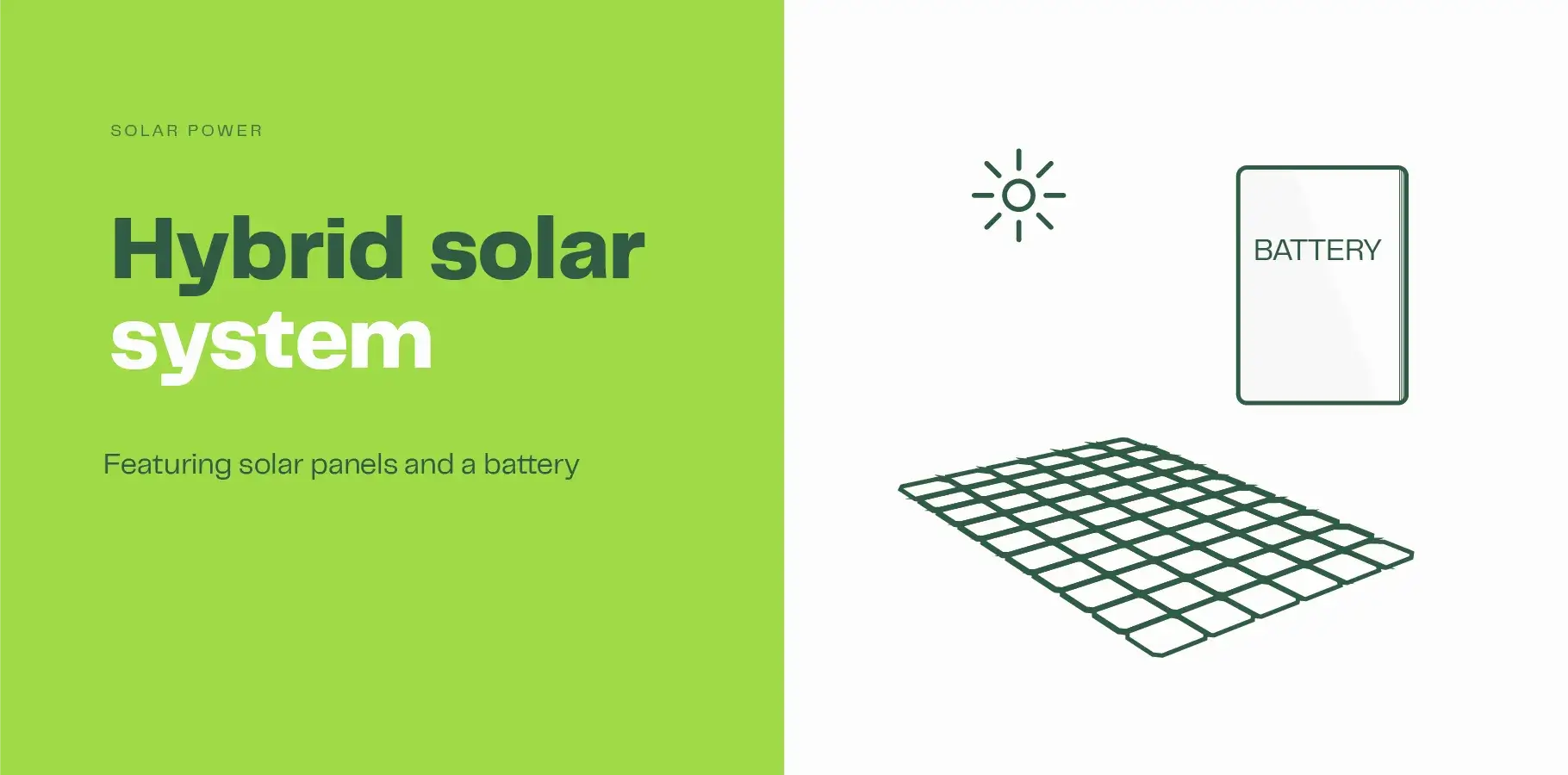
Solar systems with a battery represent just over 6% 1 of all systems installed in Australia. However, since the introduction of the solar battery rebate in July 2025, nearly one in two systems installed has been a hybrid solar system.
It's possible to add a battery to an existing solar panel system to convert it to a hybrid system. But, if you're exploring solar for your home, you're better off installing a hybrid system from the get go.
Hybrid solar systems allow you to store the solar power generated by your panels for use later in the day. Solar systems with a battery have many benefits, including the ability to provide power backup. As we reveal, the financial returns for household hybrid solar are getting better and better.
Source:
1 Solar installation statistics
How a solar system with a battery works
A hybrid panel and battery system is different from an off-grid system. A hybrid system is a grid-connect system where the grid ultimately serves as your back up power source. Hybrid systems are also much cheaper to install than off-grid systems.
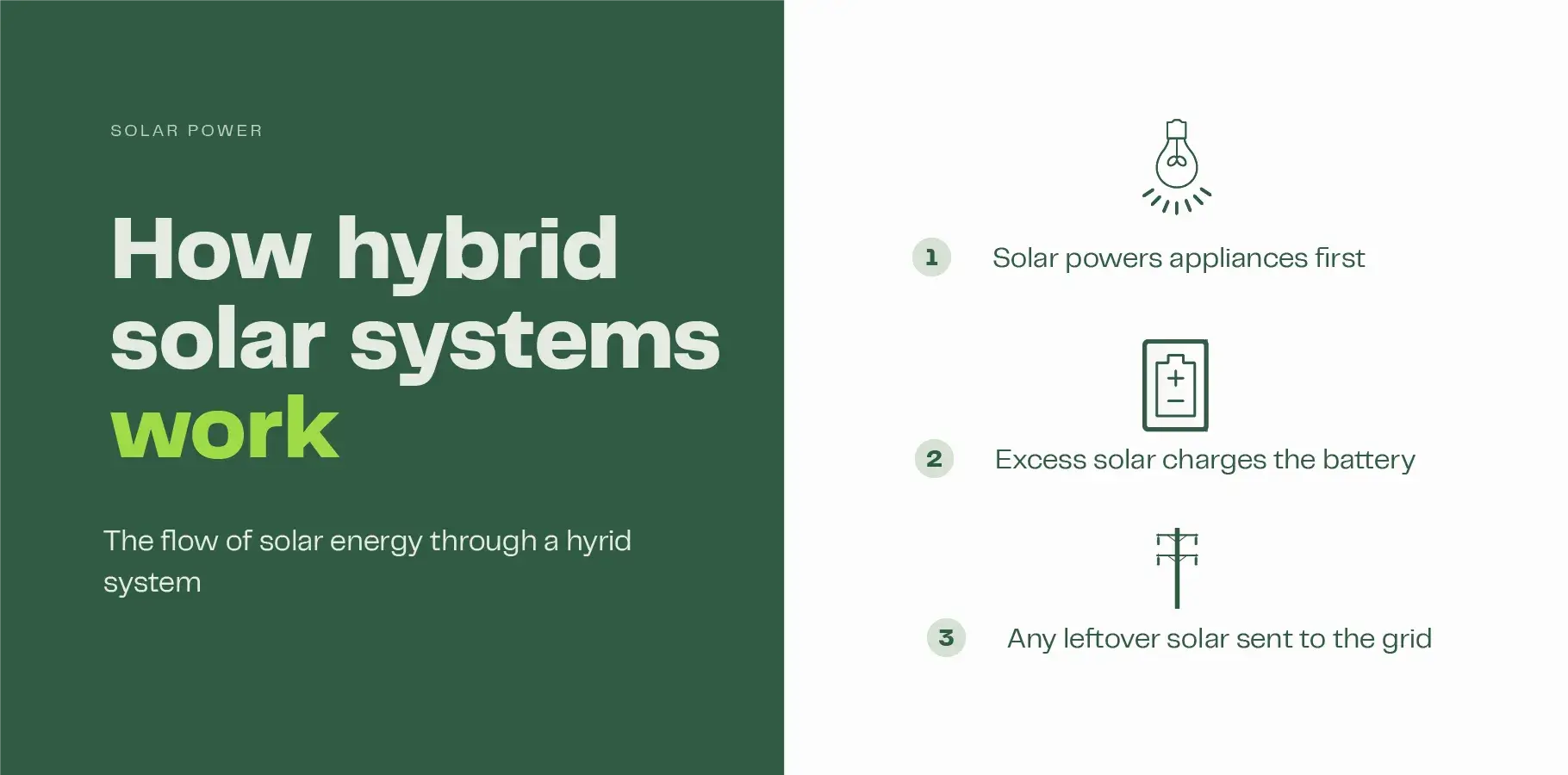
Here's a quick rundown of how hybrid systems work:
- Panels generate solar power on your rooftop
- Solar energy generated directly powers your working appliances
- Excess power generated from your panels is directed to charge your battery
- Once your battery fully charges, the excess power flows back to the grid
- When the sun isn’t shining, energy stored in your battery will power your appliances
- If your battery is empty and the sun isn’t shining, you purchase power from the grid
Instead of exporting excess energy back to the grid, a solar system with a battery stores the energy for later use. Financially, this can significantly increase your savings from solar.
Battery ready system
It is possible to buy a battery ready system in preparation for the purchase of a battery in the short to medium-term. A battery ready system comes with a hybrid inverter so that a new battery can fit straight into the system at a later date. Battery ready systems are slightly more expensive, and you should consider your planned purchase date for the battery if it is beyond 2 – 3 years, technological improvements may make your system battery ready system obsolete.
Solar system with battery cost
Hybrid systems can come in any size solar panel and battery combination. Adding a battery to a system increases the purchase cost substantially. As a guide, a 6.6kW panel system with a 10kWh battery will cost anywhere between $14,000 – $20,000.
You'll save money by buying a solar system with a battery as opposed to adding a battery at a later date - because you'll likely need to pay for a compatible inverter.
The table below shows the cost for different size systems with a battery:
| Panel system size | Battery size | Hybrid system cost |
|---|---|---|
| 6.6kW | 10 kWh | $15,300 |
| 8kW | 13.5 kWh | $18,314 |
| 10kW | 13.5 kWh | $20,314 |
| 13kW | 27 kWh | $31,628 |
The following table breaks down the cost of the different components in a hybrid system:
Hybrid system component prices:
| Component | Average cost |
|---|---|
| 6.6kW Solar panels | $5,500 – $8,000 |
| 6.6kW Battery ready system | $7,000 – $9,500 |
| 10kWh Solar battery | $8,000 – $10,000 |
| 6.6kW Hybrid system with 10kWh battery | $14,000 – $20,000 |
| Add solar back-up* | $1,500 – $3,500 |
* Some solar batteries come with battery backup therefore saving this additional cost.
Get more accurate prices and savings results
Our solar calculator allows you to analyse the difference between hybrid systems and solar panels. It will also give you more definitive output, price, savings and payback figures as the results will be specific to your location and electricity consumption habits.
Get accurate savings and payback figures for solar panels
Reduce your electricity bills. Cut your emissions.
Hybrid system with solar backup
One appeal of panel and battery systems is the ability to use your solar system as a backup power source in the event the grid goes down. Not every panel and battery system is able to provide a backup power source automatically; a special configuration is needed to allow this functionality. The solar backup functionality adds to the cost of a hybrid system by anywhere between $1,500 – $3,500.
Some batteries, like the Powerwall 3 already come equipped with backup functionality built-in.
Payback and savings for hybrid systems
The payback on a hybrid system is faster if:
- Your cost of electricity is high
- You use a lot of energy at night (or early morning)
- Your electricity consumption is high
Typically, solar panel systems payback faster than hybrid systems, but the gap is closing. It's worth noting that good solar panels will last 25 years but the battery will only last 10 or so years.
The image below shows savings and payback results from our calculator for a 8kW system with a 13.5kWh battery in Sydney:
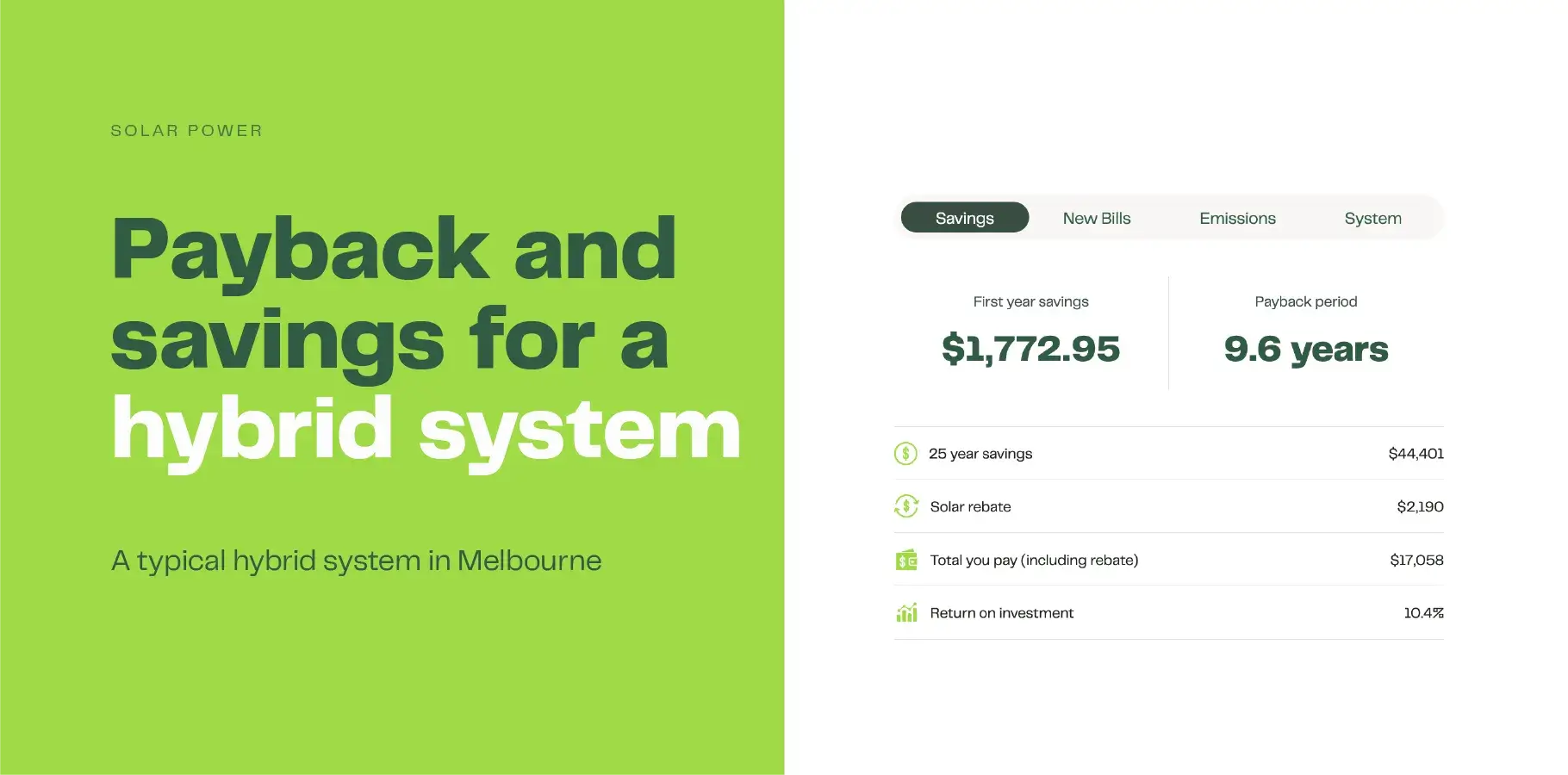
Our analysis concludes that solar systems with a battery provide better financial returns in locations with higher electricity rates.
Compare calculator results with a solar panel system
We highly recommend you use our calculator to weigh up returns for your property. You can use it to compare a solar panel system with a hybrid system.
Do I need a hybrid system?
Until recently, the financial case for a system with a battery was marginal. For households with high electricity usage, the case was more plausible.
In 2026, the landscape and financial case for hybrid systems has changed significantly. Firstly, the national solar battery rebate has lowered the upfront cost of battery storage significantly.
Secondly, prices for exporting excess solar have dropped sharply. The Australian government is even proposing free electricity for everyone during the middle hours of the day via its Solar Sharer scheme. A move that makes savings from batteries even more valuable - if the stored energy can be used during peak electricity demand times.
In summary, there's never been a better time to install a hybrid system.
Seek a quality installation
If you do go down the hybrid path, do not skimp on the quality of the system. Ensure you select good quality components and a reputable solar installer company to perform a quality installation.
Are you ready to compare solar quotes?
Get 3 free quotes and start your solar journey today.
Get free quotes