

- Blog
- Solar Power
- Smart Meter for solar power
Solar Smart Meters: A Complete Guide
- Solar Power
- 3 min read
Whether you are considering solar panels or not, a smart meter upgrade is essential to better understanding your electricity usage and taking advantage of free electricity offers.
At the time of writing, an estimated 56% 1 of all meters in the National Electricity Market (NEM) are smart meters. The Australian Energy Market Commission (AEMC) is overseeing the deployment of smart meters across the NEM to see 100% adoption by 2030.
A smart meter for solar, helps measure import and export data, leads to more accurate billing and can track your solar system’s performance. In many states, electricity distributors are rolling out smart meters at no cost.
This guide to smart meters explains everything there is to know about installation, how they work, and the benefits of a smart meter for solar owners.
Source:
1 Smart meter rollout
Do you need a smart meter for solar power?
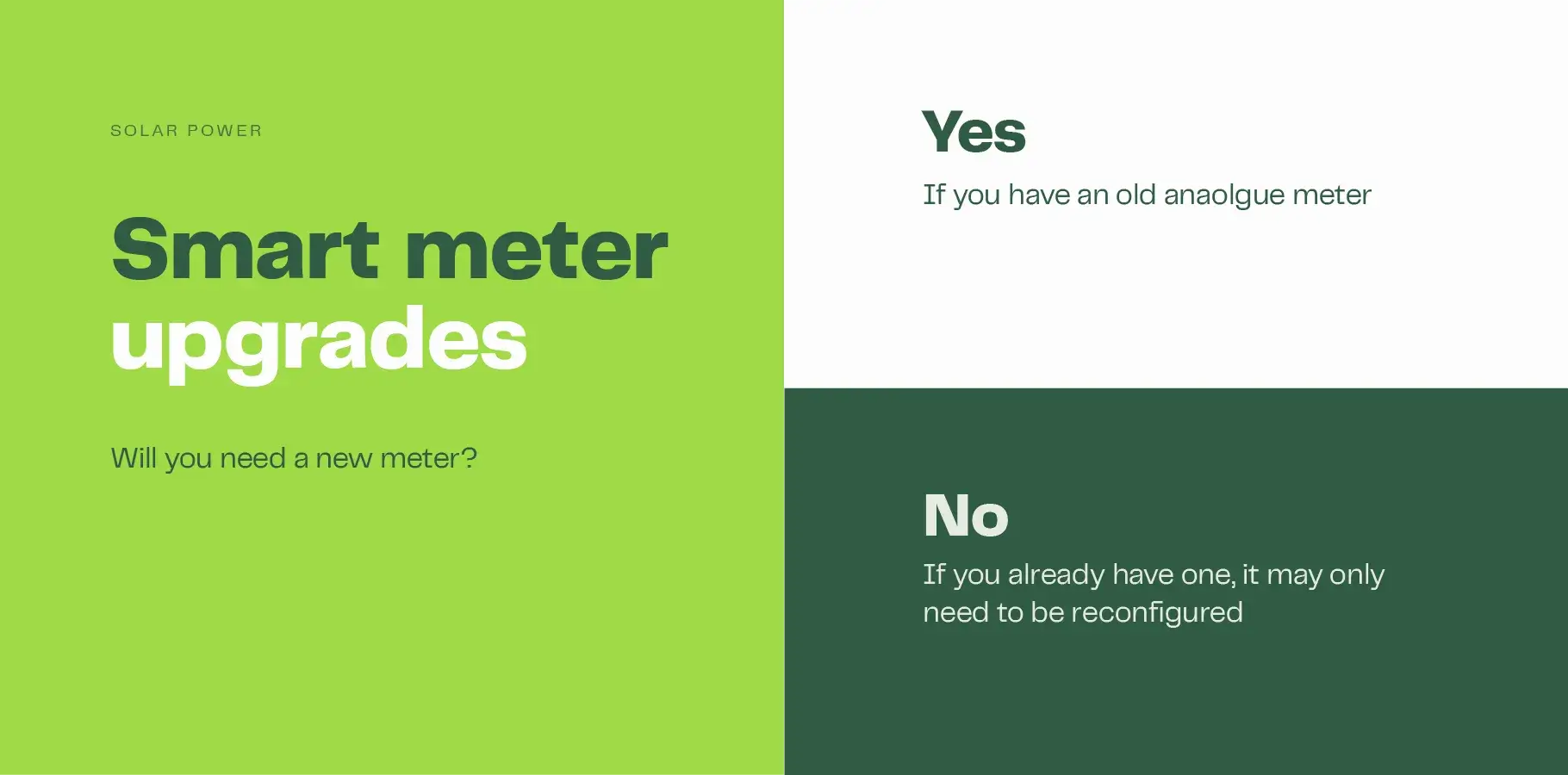
A smart meter is necessary when installing new solar panels and / or batteries. If you have an old analogue meter, your solar installer will need to contact your electricity distributor to order a new smart meter.
If you already have a smart meter, it may need to be reconfigured so that it is capable of recording excess solar energy that is sent back to the grid.
Smart meters allow you to export solar energy
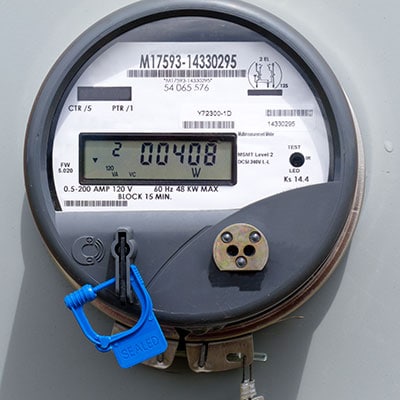
Traditionally, electricity meters only needed to measure energy going in one direction: from the electricity grid to your house. Once you have solar panels and start selling your excess electricity back to the grid, you need a smart meter – officially called an “import/export” meter – to record the energy that you export.
Smart meters also record data at 30-minute intervals, allowing you greater insight into your electricity consumption and solar generation. If you have solar, smart meters can act as a form of monitoring tool, so that you can track the performance of your system.
The concept of net metering
Throughout Australia, we have what’s known as “net metering”, meaning you export all solar electricity that’s above your consumption on a moment-by-moment basis. So, for example, if your solar system is generating 4000w of electricity, but your house is only using 1000w, you’ll automatically sell the extra 3000w back to the grid and receive a credit for each kWh from your electricity retailer. If you also have a battery system, you can still sell power back to the grid, but only once your battery is fully charged.
In addition to being more accurate than traditional spinning meters, many smart meters also send information remotely, meaning you’ll no longer have to worry about incorrect or estimated power bills.
Who installs the smart meter?
Unlike the solar system itself, your smart meter can only be installed by your energy retailer or your network operator, depending on where you live. In most cases, your solar installer will request and schedule the meter upgrade on your behalf, using some basic details from your power bill.
Before you start the process, it’s helpful to understand that your installer doesn’t have control over the timing of your solar meter upgrade. It may occur before, during, or after your solar installation – in which case you’ll need to leave your system turned off until a technician arrives to complete the work.
A smart meter
 .
.
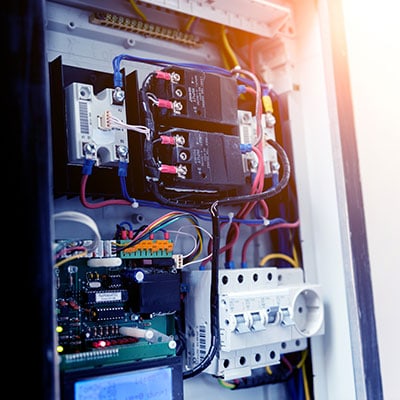
Upgrading a switchboard for solar.
How much will my meter upgrade cost?
As part of the national rollout, smart meters are replacing analogue meters at no cost to consumers. If you already have a smart meter, but it needs to be reconfigured to allow bidirectional billing, the cost to upgrade the meter may fall between $80 – $150. It’s worth checking with your electricity retailer or network distributor, as they may absorb this cost for you.
A technician will complete the upgrade work and handle the correspondence with your retailer or the network distributor. If there is a charge, your electricity retailer will either send you an invoice or add the cost to your next power bill.
Accessing free electricity with a smart meter
The Australian government’s Solar Sharer Offer initiative will see electricity retailers provide eligible consumers with three free hours of electricity. To access the free electricity, it is a requirement that households must have a smart meter installed.
Will my switchboard need an upgrade for solar?
Your central switchboard contains all of the vital circuit breakers and safety switches that protect your property from electrical hazards. When you install a solar power system, you will also need some new breakers and switches to keep your property safe. These requirements mean you may need a switchboard upgrade to bring it up to speed with the current Australian electrical standards.

As a general rule, most modern homes can accommodate the additional switches without needing any extra work. However, if you have a main switchboard without any free slots, a meter box with old ceramic fuses, or a backing board made of asbestos, it will likely need an upgrade either before or during the solar installation.
How much does a switchboard upgrade cost?
Upgrading an electrical switchboard can cost anywhere between $1,500 to $5,000+ depending on the complexity of the upgrade. The smaller the home, the smaller the cost to upgrade the switchboard. If you are renovating your home and switching to 3 phase power, upgrading the switchboard will likely fall in the higher end of the range published above.
While it may be hard to stomach the cost of an upgrade, it can be an important investment in the safety and running efficiency of your home.
Searching for a quality solar system?
If you need help making the switch to solar energy, you can use our free solar calculator to project your estimated savings, payback period, system cost, and even a return on investment. You can also read about all of the different brands of solar panels and their strengths and weaknesses. Then, you can also request three free solar quotes from accredited installers and receive professional, obligation-free advice from companies in your local area.
 written byBy Michael Henderson