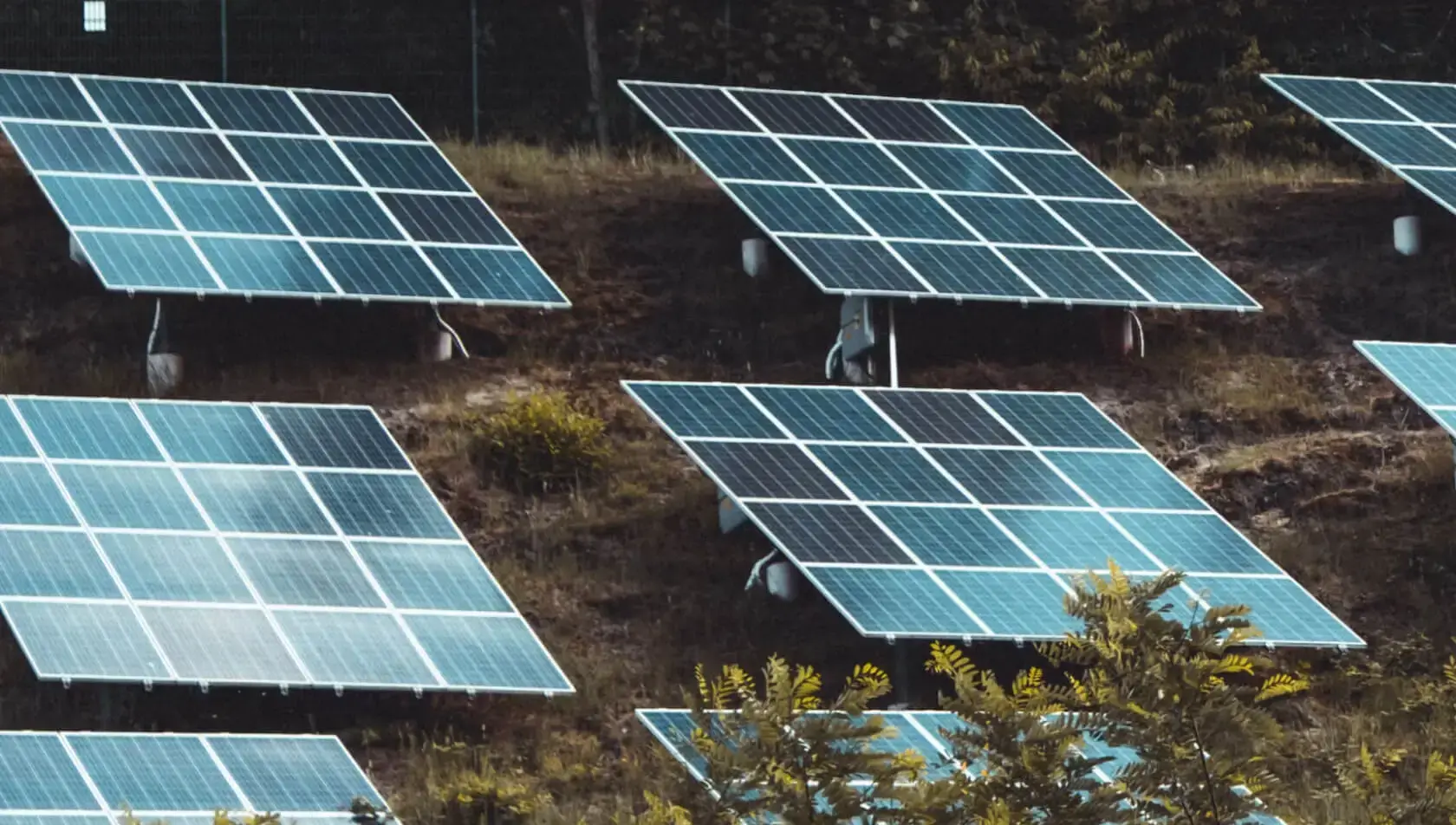


Australia continues to set records when it comes to solar energy. Nearly 40% of all homes in the country have solar panels on their roof.
When it comes to solar panel recycling though, Australia is not as successful. It is estimated that only 17% 1 of all solar panels are recycled. The solar industry has been calling to encourage panel recycling for many years, and now the Australian government is set to invest $24.7 million to develop a pilot program for a national scheme.
In the meantime, we look at how and where homeowners and businesses can recycle solar panels in Australia.
Table of contents:
- Solar panel longevity and early decommissioning
- Can solar panels be recycled?
- How to recycle solar panels
- Where to recycle solar panels in Australia
- The cost to recycle solar panels
- How recycling in Australia compares
- Australian government pilot scheme for recycling panels
Solar panel longevity and early decommissioning
Solar panels are expected to last over 25 years 2. Modules come with a 25-year performance warranty, an indicator as to what sort of output they will produce at the 25-year mark. Many manufacturers guarantee their modules will produce well over 80% of their rated output after 25 years.
Despite this level of guarantee, many solar panels are discarded long before they stop working. Early decommissioning of panels is adding to the solar waste issue. At the current rate, it is estimated that there could be up to 450,000 tonnes 3 of photovoltaic (PV) waste by 2040.
Reasons for early decommissioning of solar panels
There are several reasons why solar panels are being decommissioned early, but broadly the reasons fall into two categories: faulty products (including damage) and consumer desire for new upgrades.
Reasons panels are discarded before the end of their useful life include:
- Poor quality and don’t last
- Performance limitations
- Decommissioned before they fail
- Warranty and insurance claims (replacing all panels instead of faulty ones)
- More cost effective to replace rather than repair
Sources:
1 Media release for national solar panel recycling program
2 How long solar panels last – Solar Calculator
3 Reclaimed PV panels market assessment report
Can solar panels be recycled?
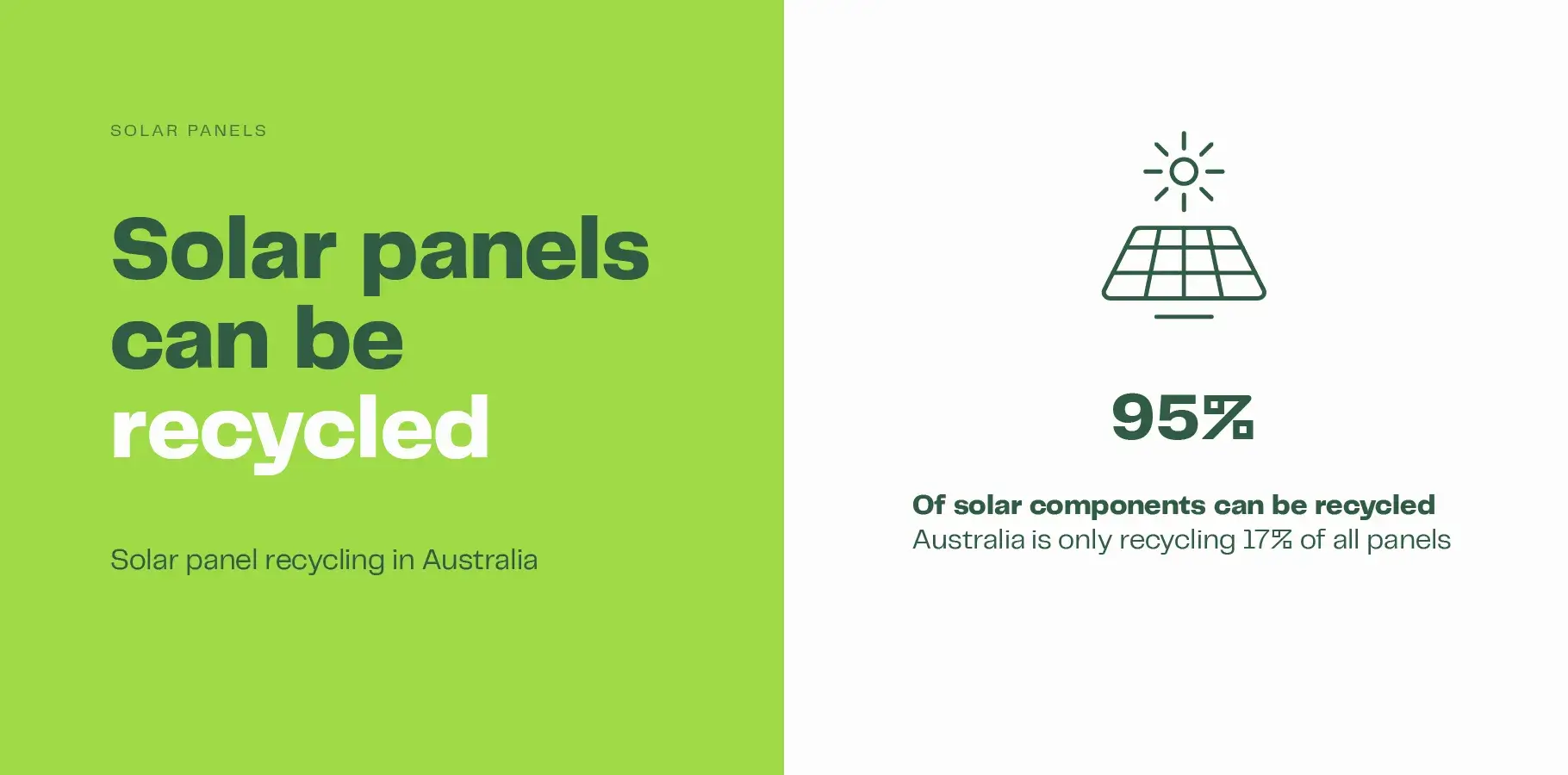
Make no mistake, solar panels can be recycled. In Australia, only one-sixth of all panels gets recycled, whereas in Europe, recycling is mandatory. Experts claim that 95% of the materials 4 that make up a solar panel can be recycled. It is yet another advantage of renewable energy, wind turbines are 90% recyclable.
Solar panels are primarily made of silicon, glass, EVA (Ethylene Vinyl Acetate) and metal. Though it is the tiny amount of silver in panels that is most valuable. Silver accounts for 47% 3 of the value of the panel when recycling, despite only weighing in at around 20 grams. By contrast, glass accounts for 80% of the weight of the panel, but only 8% of the value.
The table below shows the value of the components of a solar panel:
| Material | Value |
|---|---|
| Silver | 47% |
| Aluminium | 26% |
| Silicon | 11% |
| Glass | 8% |
| Copper | 8% |
Sources:
4 End-of-life solar photovoltaic waste management – Science Direct
How to recycle solar panels
Solar panels are often discarded when it is deemed time for their replacement. Typically, either through system failure or the desire for a better system. There are various ways to reuse and recycle solar panels once they are removed from a rooftop.
Reusing solar panels
Contributing to the solar waste issue, is the early decommissioning of older solar panels that perform adequately. In 2023, a report on reclaiming PV panels was presented to the Productivity Commission explaining that on average, the decommissioned panels were still producing 96% 3 of projected output.
In the United States, used panels are resold for around 25% of the cost of new panels. However, reuse in Australia is relatively low. Australian standards do not encourage the reuse of old modules.
Disposing of panels at a recycling plant
Consumers of course can choose to recycle their panels at a waste station, or have their installer dispose of the panels. Though, only specially equipped plants will be able to properly recycle the panels to realise their full benefit.
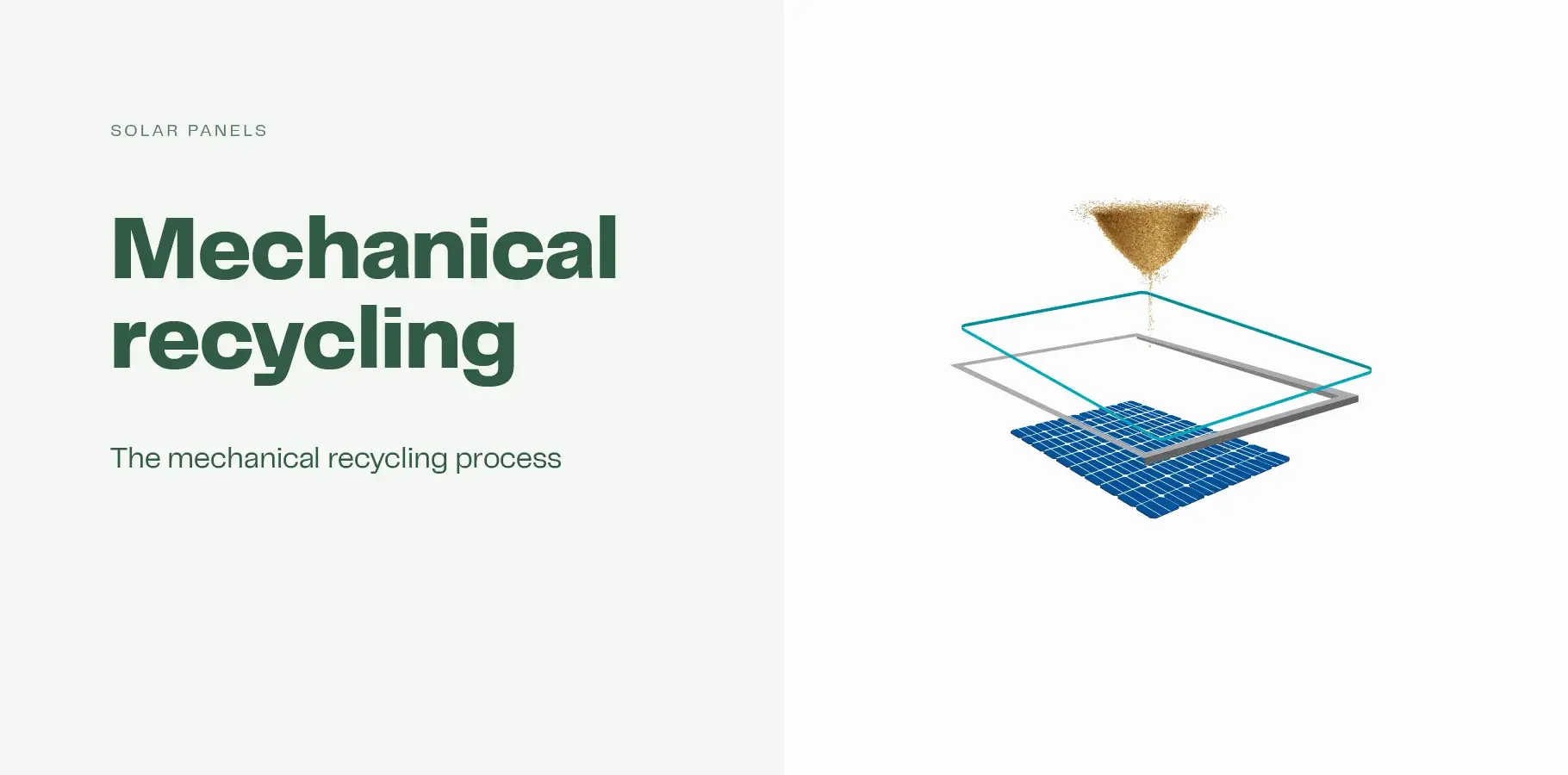
Once at a recognised plant, the process of pulling apart the solar panel components begins.
Where to recycle solar panels in Australia
Recycling solar panels varies according to location. Some states, like Queensland, have a structured scheme in place to help with recycling. We explore recycling options in major Australian cities:
| Operator | Location | Notes |
|---|---|---|
| Pan Pacific Recycling | Crestmead | 240,000 panels per year |
| Sircel | Yatala |
| Operator | Location | Notes |
|---|---|---|
| PV Industries | Bankstown | Also: Dubbo, Maitland, Newcastle, Thornleigh & Central Coast |
| Sircel* | Villawood | Also: Parkes |
| Operator | Location | Notes |
|---|---|---|
| Elecsome | Keysborough | |
| Lotus Recycling | Thomastown | |
| Sircel | Dandenong |
| Operator | Location | Notes |
|---|---|---|
| Solarec | Athol Park | |
| PV Industres | Various | * Transported to VIC |
| Operator | Location | Notes |
|---|---|---|
| Collins Recycling | Willetton |
Solar panel recycling in Brisbane
Brisbane is home to a purpose-built solar recycling plant complete with funding from the Queensland government. The Pan Pacific recycling plant is capable of handling up to 240,000 panels per year.
Solar panel recycling in Sydney
Sydney is served by at least two specialist PV recycling operators. PV Industries has a plant in Bankstown that is capable of processing up to 200,000 panels per year. Sircel is another operator in NSW with locations in Villawood and Parkes.
Solar panel recycling in Melbourne
In Melbourne and Victoria, it is illegal 5 to dispose of solar panels and e-waste into landfill.
Sources:
5 Victoria e-waste ban
The cost to recycle solar panels
A reputable solar installer is best placed to remove and dispose of an old solar system. They will likely charge a disposal fee of between $15 – $40 per panel. Fees vary depending on how many panels there are and the install location.
The installer will then organise for collection of the old panels for recycling.
How recycling in Australia compares
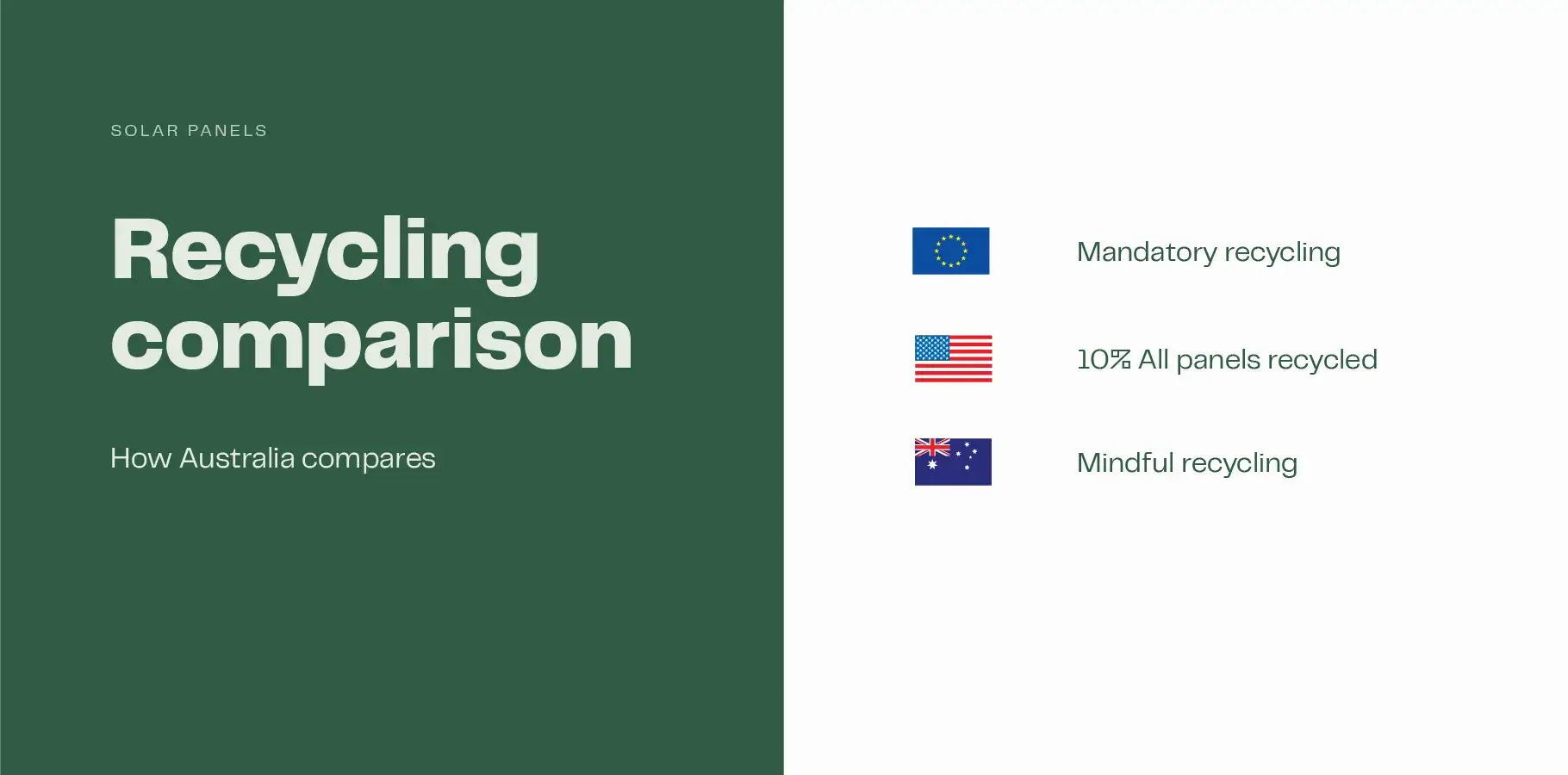
Despite recycling only one in every six panels, Australia compares favourably to the United States where it is estimated that less 10% 6 of solar panels are recycled. Europe is the gold standard for solar recycling with a mandatory Waste Electrical and Electronic Equipment (WEEE) Directive governing the reuse and recycling of PV panels. As a result, it is estimated that 85% 7 of all panels in Europe are recycled.
Sources:
6 Solar panels age out – Yale Environment 360
7 Recycling materials from green energy technologies – European Environment Agency
Australian government pilot scheme for recycling panels
In January 2026, the Australian government announced it will pilot a national solar panel recycling program. The government is planning to invest 24.7 million 1 in the scheme over the next three years to set up 100 solar panel collection sites around the country.
The pilot scheme sets Australia on a path to create circular PV economy, one that can be compared to high European standards.
The push for a national solar panel recycling program is welcome news for many solar owners. Most consumers invest in solar to lower their electricity bills and, lower their carbon footprint as well. It will be comforting to know that their green investment is recycled rather than ending up in landfill.
 written byBy Michael Henderson