


Monocrystalline vs polycrystalline solar panels
We explain why monocrystalline outperforms polycrystalline panels.
When selecting panels to form part of your system, you’ll likely be choosing a monocrystalline solar panel. In recent years, the high efficiency and improvements in technology of monocrystalline panels has far outstripped that of polycrystalline solar panels.
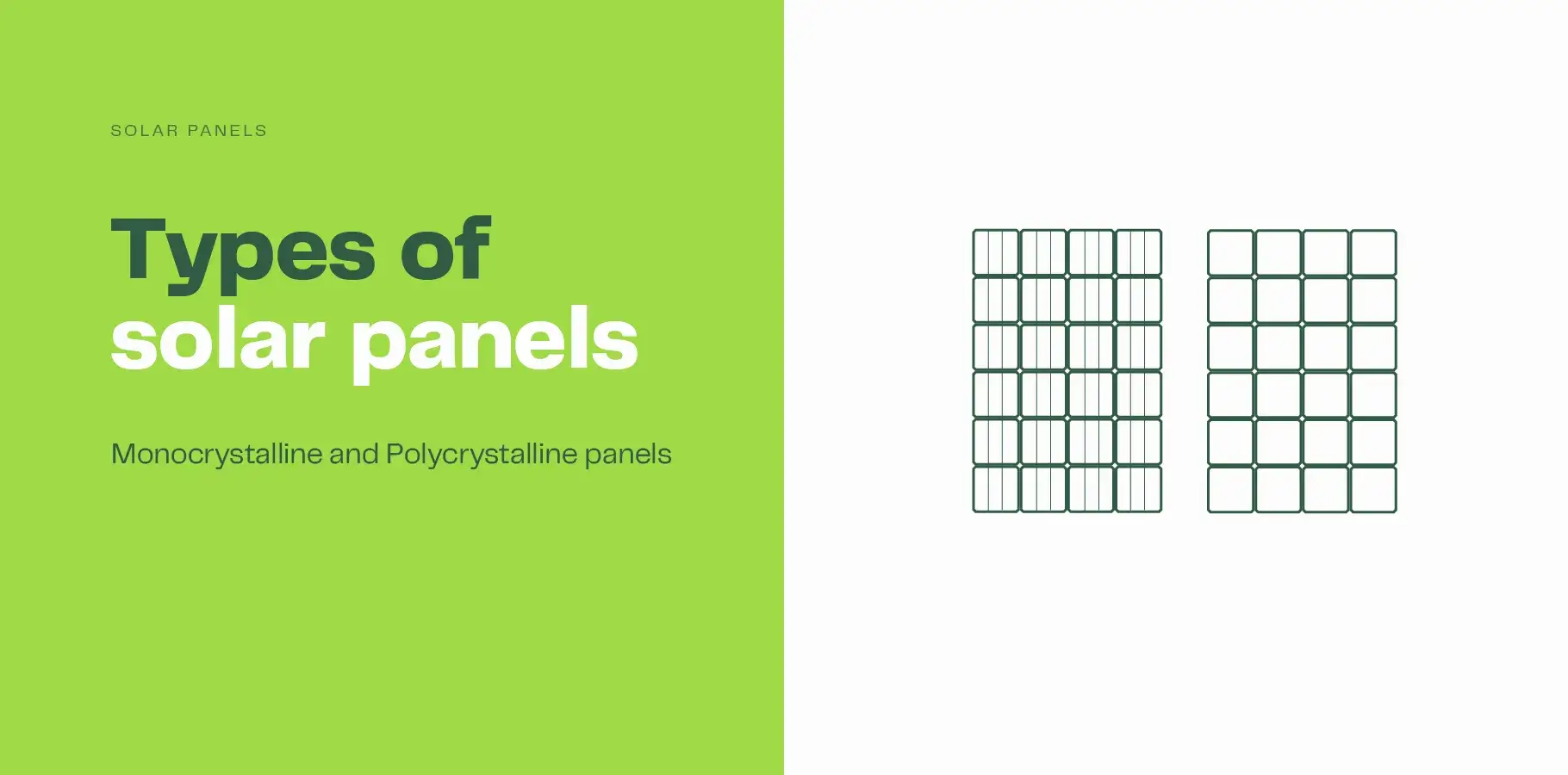
There are several differences between monocrystalline (mono) and polycrystalline (poly) panels, that now make selecting a mono panel as the way forward. A comparison of the best solar panel brands shows that the most suitable modules for Australian households are all monocrystalline panels.
Other less popular types of panels include amorphous (thin-film) panels and solar tiles – which are in the early phases of their product cycle. However, neither are competitive in the Australian household solar market.
Monocrystalline solar panels
Monocrystalline solar panels are made from silicon, glass, Ethylene Vinyl Acetate (EVA) and metal. Mono panels use higher purity silicon compared to polycrystalline panels and the way light interacts with their singular crystal structure gives them dark, black appearance.
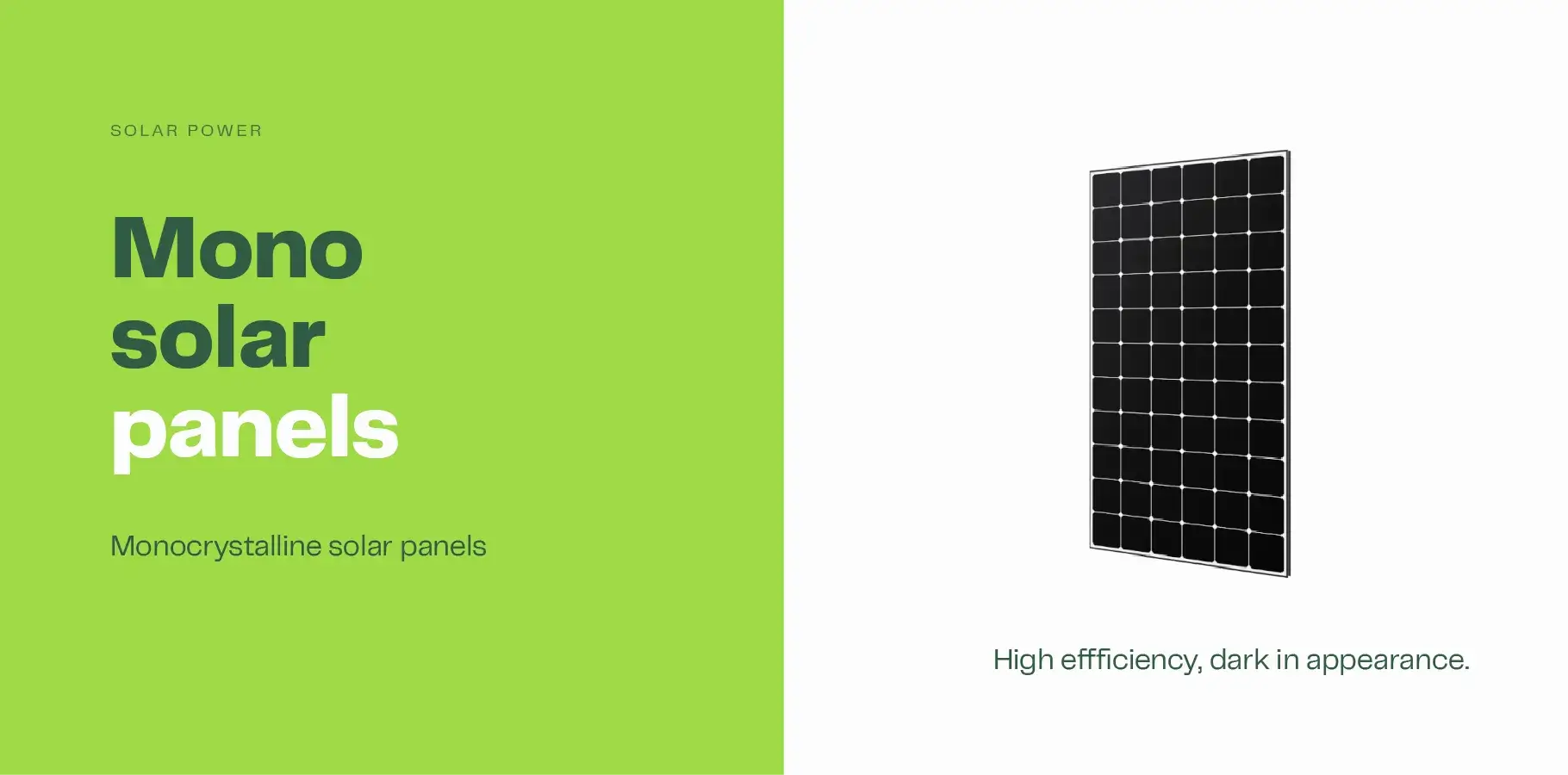
Monocrystalline solar panel prices
Monocrystalline panels vary in price. Factoring in the rebate, installation and GST, the average cost of solar is around $1,000 per kW for rooftop systems. Prices vary in each state, and depending on the quality of the panel. Our solar system prices guide explains why costs vary between systems and solar companies.
Given that monocrystalline panels now far outweigh polycrystalline panels, it is no surprise that they are more expensive.
Advantages of monocrystalline solar panels
Mono panels have a higher efficiency, perform better and last longer than polycrystalline panels. Key advantages of mono panels include:
- High efficiency
- Require less roof space
- Last longer
- Have a high heat tolerance
- Perform better in all conditions
High efficiency
Solar panel efficiency is the rate at which a panel converts sunlight into electricity. Monocrystalline panels are more efficient than polycrystalline modules with the top of the range SunPower panels achieving up to 23% efficiency. The Monocrystalline panels typically have an efficiency of between 20 – 23% while the efficiency of polycrystalline panels is limited to between 16 – 18%.
The higher the efficiency, the more electricity the panels produce.
Roof space
One advantage of the high efficiency mono panels is that you need less of them on your roof to achieve your desired system size.
High heat tolerance
Mono panels perform better than their counterparts in high temperatures. Solar panels in high temperature produce less electricity, but mono panels have a higher resistance to heat helping them to perform better.
Last longer
Monocrystalline panels are more durable and last longer than polycrystalline modules. The longest solar panel warranty available is now 40 years, but most sit around the 15 – 25-year mark. The product warranties on other types of panels is much shorter.
Differences between mono and poly panels
Monocrystalline and polycrystalline solar panels are both suitable for use in Australia. We explain the differences between the two popular types of panels:
Monocrystalline vs polycrystalline:
| Differences | Monocrystalline | Polycrystalline |
|---|---|---|
| Appearance: | Black | Blue with crystal structure |
| Manufacture process: | More intensive | Comparatively simple |
| Efficiency: | 20 – 23% | 16 – 18% |
| Roof space: | Minimises area | Requires more space |
| Price: | More expensive | Less expensive |
| Temperature performance: | More effective | Not as effective |
| Suitability for rooftops: | Very high | No longer suitable |
Appearance
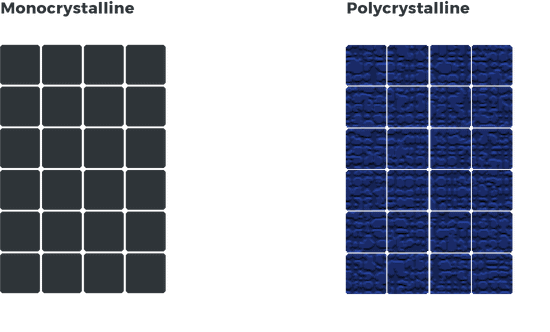
It is easy to distinguish between monocrystalline and polycrystalline panels; mono panels tend to be much darker almost black in appearance.
Polycrystalline panels, on the other hand, are much bluer and, the texture of the crystal is visible in the actual panel.
Manufacture process
There is a slight difference in the manufacturing process of different types of solar panels. Polycrystalline panels are made from multi-crystalline silicon that is melted and placed in square moulds before being cut into wafers. Monocrystalline panels are made from cylindrical silicon ingots that are cut into wafers; they feature more pure silicon than polycrystalline panels, and this is why they are more efficient.
Polycrystalline solar panels
Polycrystalline panels are bluer in appearance, and the crystal formation within the module is visible. The manufacturing of poly panels has really slowed, in favour of the more efficient mono panels. You may be drawn to polycrystalline panels because they are cheaper, the downside is you are dealing with older technology and they will take up a little more of your roof space.
Selecting a panel type
Nowadays, selecting a panel type is more straightforward, it’s going to be monocrystalline. The days of selecting between monocrystalline and polycrystalline solar panels are over.
Instead, you’ll need to choose between different cell technologies within monocrystalline panels and the level of quality you are prepared to pay for.
Although solar panels can be recycled, we recommend you prioritise quality and longevity over price.
Are you ready to compare solar quotes?
Get 3 free quotes and start your solar journey today.
Get free quotes